Cooling Fan for Nissan Altima 2013-2018 2.5L Auto Parts Catalog
Buyers sourcing a Cooling Fan for Nissan Altima can use this page as a technical and commercial confirmation guide for 2013-2018 2.5L. This page explains fitment verification, product function, common failure indicators, quality choices, packaging, and the information required for an accurate export quotation.
Nissan Altima Cooling Fan Overview
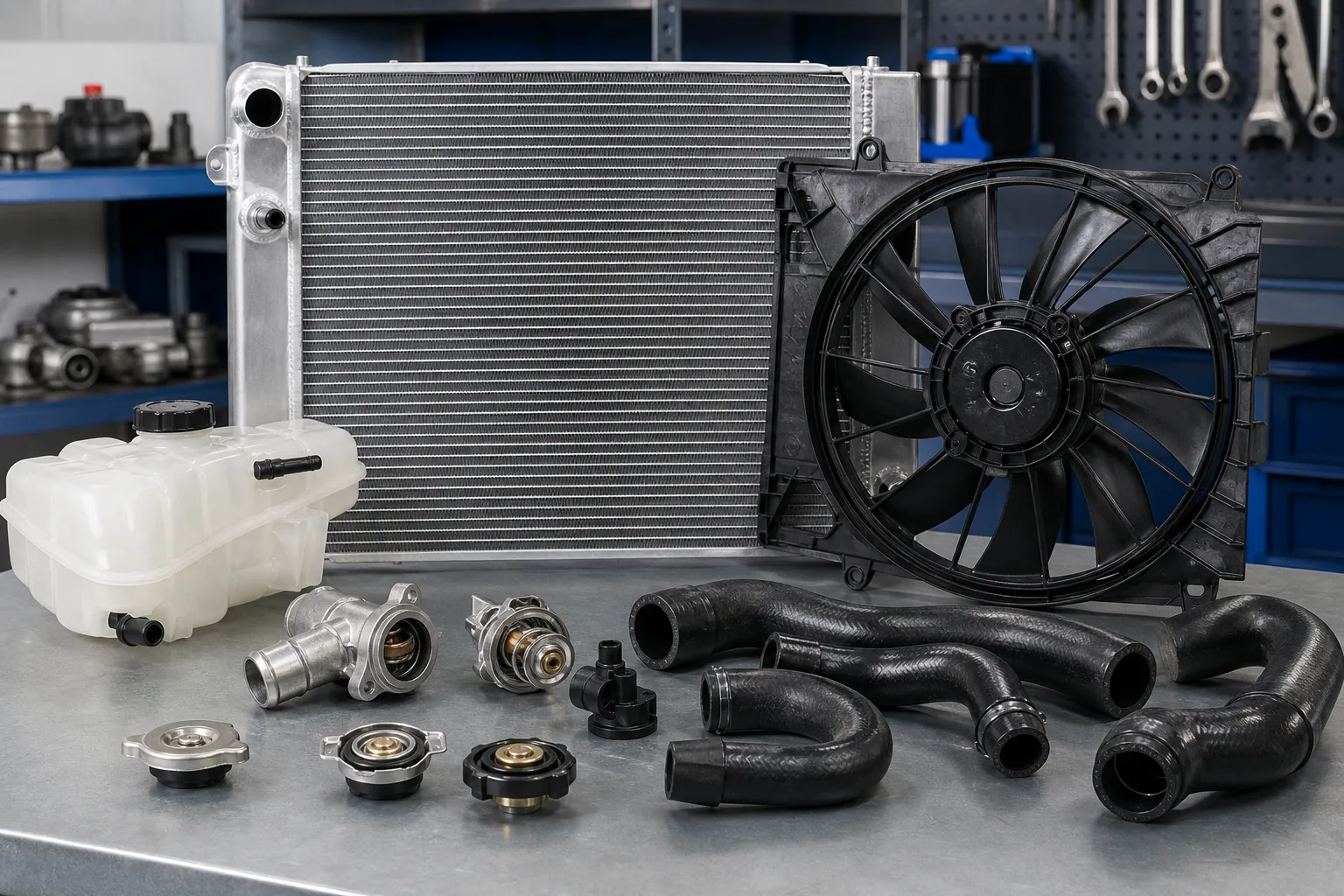
The Cooling Fan is part of the vehicle's engine cooling and climate-control system. Its primary role is to manage heat transfer and airflow so the engine, transmission, turbocharging system, or passenger compartment operates within its intended temperature range. Correct operation depends on accurate dimensions, suitable materials, stable manufacturing, and proper installation. A replacement should therefore be selected by application data rather than by appearance or a shortened model description.
A visual match is useful, but reliable selection should also compare the OE reference, chassis code, engine information, production date, and installation position. The title reference is 2013-2018 2.5L. Treat this as a starting point and confirm it against the vehicle identification number, engine code, chassis code, existing component, and original part number whenever those details are available.
Key Product and Fitment Data
| Vehicle | Nissan Altima |
|---|---|
| Part name | Cooling Fan |
| Fitment reference | 2013-2018 2.5L |
| OE reference | Confirm by OE number or VIN |
| Product intent | Auto Parts Catalog |
| Supply type | Aftermarket, OE-quality, private-label, and wholesale options subject to specification |
| MOQ | Depends on stock, packaging, quality grade, and mixed-order requirements |
OE numbers can be superseded or shared across several applications. Conversely, one vehicle can use more than one version of the same component. The number on the removed part, clear photos of connectors and mounting points, VIN details, and physical measurements are valuable confirmation evidence. Do not rely on one catalog field when the order quantity or installation cost is significant.
Function and Common Failure Signs
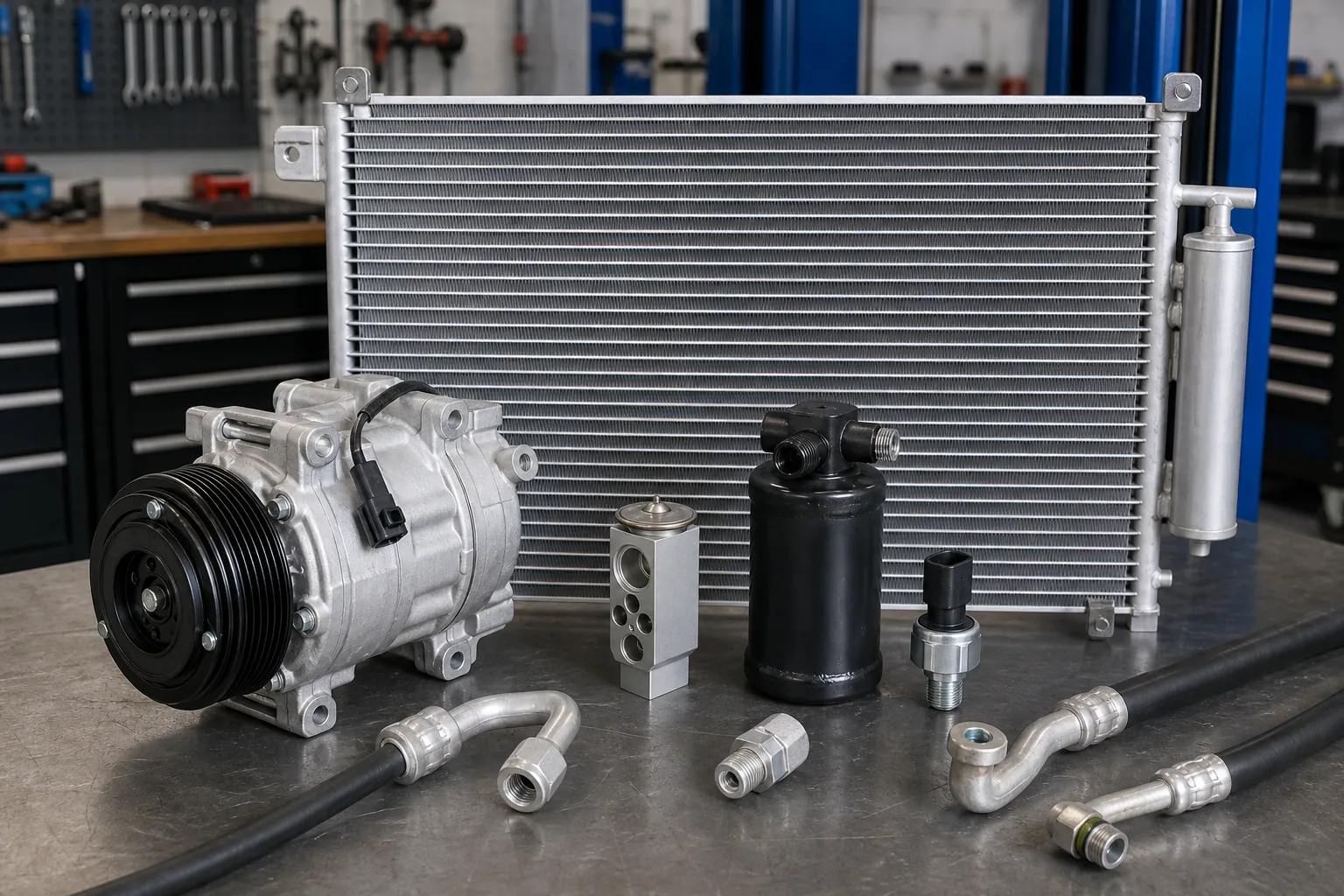
Within the engine cooling and climate-control system, the Cooling Fan must perform consistently under changing temperature, vibration, load, moisture, and road conditions. Depending on the application, wear or failure may produce overheating, coolant loss, weak cabin heat, poor air-conditioning performance, visible leakage, fan noise, unstable temperature, or damaged cooling fins. These symptoms can also be caused by connected components, so diagnosis should be completed before parts are ordered.
A technician should inspect the complete related system instead of replacing parts solely because a dashboard code or visible symptom is present. Confirm wiring, fasteners, mating surfaces, fluid condition, alignment, pressure, or associated wear items as applicable. This reduces unnecessary replacement and helps identify whether additional parts should be included in the same shipment.
Specifications and Quality Levels
Important confirmation points include core dimensions, inlet and outlet position, hose diameter, transmission-cooler connections, fan or sensor provisions, refrigerant specification, and engine code. Material and production considerations can include brazed aluminum cores, molded engineering plastics, reinforced rubber, corrosion-resistant fittings, pressure-tested joints, and application-specific sealing materials. Exact specifications vary by OE reference and application, so technical drawings, samples, inspection reports, or agreed limit samples should be used for important wholesale programs.
The cheapest quotation is not always the lowest total cost when returns, installation labor, warranty claims, and damaged packaging are considered. Economy, standard aftermarket, premium aftermarket, and OE-equivalent positioning should be defined before quotation. Buyers should ask how the supplier controls incoming material, dimensional accuracy, functional testing, surface protection, labeling, and final inspection rather than relying only on broad phrases such as “high quality.”
Fitment Confirmation Before Ordering
For this Nissan Altima application, provide the complete model year, engine displacement, engine code, transmission type, drivetrain, body style, production month, destination market, and VIN when possible. For position-specific products, state front or rear and left or right. For electrical products, provide connector and pin photos. For mechanical products, compare critical dimensions and mounting points.
If the old component carries several numbers, send every visible number because one may be the manufacturer number, casting number, supplier number, or superseded OE reference. Photos should show the complete part, labels, connectors, mounting faces, and any differences between the old component and catalog image. Written confirmation should be retained with the quotation and purchase order.
Packaging, MOQ, and Export Supply
Available packaging may include neutral cartons, branded boxes, polybags, protective sleeves, molded trays, inner dividers, pallet packing, barcode labels, and customer-designed private-label packaging. Packaging should protect functional surfaces and connectors during inland transport, container loading, customs handling, and last-mile delivery. Heavy parts may need reinforced cartons, while sensitive electronic or optical parts require moisture and impact protection.
MOQ depends on factory policy, stock availability, packaging design, and whether the order combines multiple references. Samples or small trial orders may use neutral packaging, while custom boxes and printed labels normally require higher quantities. A complete quotation should show unit price, quantity, quality level, packing method, carton quantity, gross weight, lead time, payment terms, and Incoterm.
Common Buyers and Markets
A useful export offer should support mixed references, clear carton identification, stable lead times, and documentation that helps the buyer verify applications. Nissan Altima applications can appear across North America, Europe, the Middle East, Latin America, Africa, Asia, and Oceania, but demand varies by generation and local vehicle parc. Market research should therefore be based on the exact chassis and engine rather than the model name alone.
Importers should confirm local certification, labeling, product-liability, customs, and warranty requirements before shipment. Products related to safety, emissions, lighting, electronics, refrigerants, or hazardous materials may be subject to additional rules. The buyer and supplier should agree which documents, markings, test reports, and country-of-origin information are required.
Installation and After-Sales Checks
Installation should be performed by a qualified technician using the correct service information, tools, tightening sequence, torque values, fluids, calibration, and safety procedures. Related fasteners, seals, clips, hoses, wiring, alignment settings, and wear components should be inspected. Some electronic components require coding, initialization, relearning, or fault-code clearing after installation.
Before approving a production order, buyers can request samples for dimensional, installation, road, or bench testing. After installation, record the vehicle details, installed part number, date, mileage, and diagnostic findings. Clear records make warranty analysis faster and help distinguish manufacturing issues from incorrect fitment, external damage, or problems elsewhere in the vehicle.
Frequently Asked Questions
How do I confirm that this Cooling Fan fits my Nissan Altima?
Send the VIN, full model year, engine code, chassis code, transmission and drivetrain details, OE number from the old part, and clear photos. Critical dimensions or connector details may also be required.
Can I order using only the OE number?
The OE number is an important reference, but supersessions and market-specific versions exist. Confirm the number together with vehicle data and visual or dimensional evidence.
Are different quality grades available?
Many applications can be supplied in economy, standard aftermarket, premium, or OE-equivalent grades. Availability and specification must be confirmed for the exact reference.
Can the packaging carry my brand?
Private-label boxes, labels, barcodes, carton marks, and printed instructions may be available. Custom packaging normally has a separate MOQ, artwork approval process, and lead time.
Can several Nissan Altima parts be combined in one shipment?
Mixed-reference orders are often possible when stock, factory coordination, carton labeling, and export documentation are planned in advance.
What information is needed for a quotation?
Provide the part name, OE number, vehicle details, required quantity, quality level, packaging request, destination country or port, and preferred trade terms.
Related Search Terms
Related searches include Nissan Altima Cooling Fan, Cooling Fan for 2013-2018 2.5L, Nissan Altima Cooling Fan supplier, Cooling Fan wholesale price, Nissan Altima replacement parts, Cooling Fan OE cross reference, aftermarket Cooling Fan, and Nissan Altima auto parts exporter. Use the exact OE number, engine code, and chassis generation to narrow results and avoid incompatible versions.